
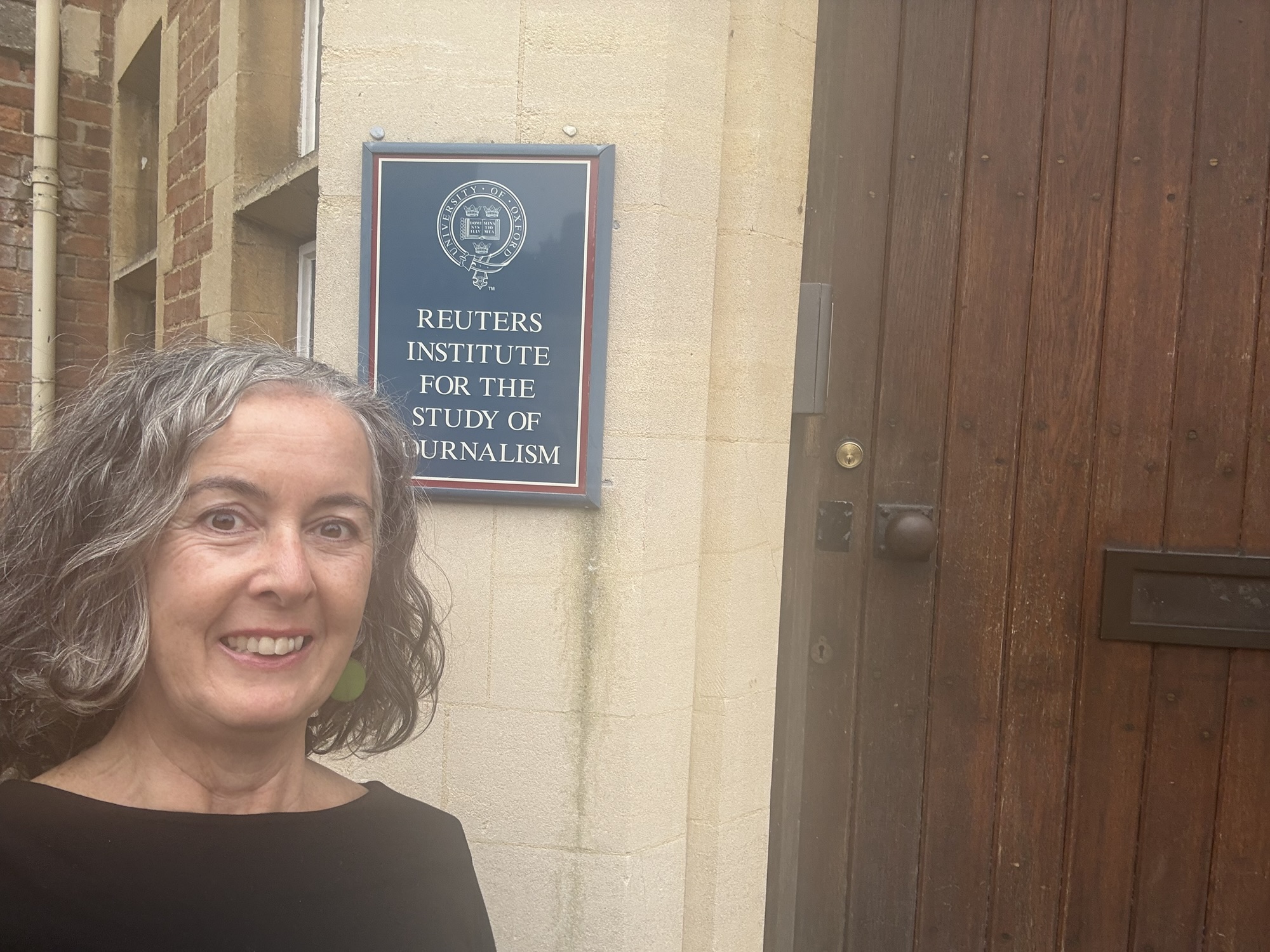
The Reuters Institute for the Study of Journalism is dedicated to exploring the future of journalism worldwide through debate, engagement, and research.
“We believe in the value of independent journalism, the power of news, and the importance of an informed public. We are committed to the timeless journalistic aspiration of seeking truth and reporting it, as well as the ongoing work of remaking the profession and the organisations that enable it. Our focus is on journalism, the media industry, and the public that they serve.
By connecting practice and research, by facilitating global exchange, and by driving conversations around the future of news, we work to ensure that journalists, editors, and media executives face the opportunities and challenges of a changing media environment from a position of strength. Our goal is to help them build better and more sustainable journalism for tomorrow.”
I met with Dr. Richard Fletcher, the Institute’s Director of Research. Richard primarily focuses on the Digital News Project and co-authors the Digital News Report – the world’s largest annual survey of global news consumption. This survey helps us to better understand how the public consumes news, how audiences are segmented, fragmented and polarised, and what drives trust in news sources.
Our discussion was fascinating and wide-ranging, so I have attempted to summarise into topics below.
The new media landscape
Often, we refer to traditional (or legacy) media and social media, as the two categories; but this blurs when you look at intent and also the fact that many trusted media organisations are very active on social media. Our conversation distinguished between fact-driven sources (eg BBC, Guardian etc.) and those driven by clicks and/or outrage (eg the Murdoch press, Twitter). Richard also referred to traditional media “whose roots are in print”, and “digital-born” media such as the Huffington Post or Buzzfeed.
We discussed how fact-based media can influence change in an environment where they are not the primary news source for many people. Richard added that it was crucial for traditional media to be present in the digital sphere to offer some level of balance to the clicks-driven environment.
Public Opinion and Media
We discussed the importance of public opinion in shaping policy and the role of empirical research in understanding how people get news and what they want from their information environments. Richard talked about the work of the Reuters Institute and its empirical research in mapping out how people get news, their opinions on information environments, and their preferences for media content. Whilst it should not be the sole factor in policymaking, it is a crucial one.
Public Demand for Middle Ground
Richard shared insights from his research, indicating that the public often desires more middle-ground information from their media sources. He noted that people frequently ask for clarity on policies and truthfulness, which electoral commissions often cannot provide due to legislative constraints. So what organisations and institutions can take on this role, or at least help?
Journalists’ Role in Elections
We discussed the expectations placed on journalists, especially those in public service media, to fact-check and provide clarity during elections, acknowledging the challenges journalists face in addressing complex questions. We also discussed the issue of fact-checking, which has been a key factor in many recent elections and that has, at times, been viewed as the silver bullet against disinformation. However, while fact-checking is important, it often does not change public opinion significantly, as elections are fought on emotional and philosophical lines rather than facts. It also rarely changes the minds of those with the most polarised views.
Legislative audacity and moral authority
I mentioned the concept of “legislative audacity” as introduced by a UK Electoral Commission colleague, where electoral commissions push right up against the boundaries of existing legislation to address new challenges. The use of moral authority by electoral management bodies (and other trusted institutions) in influencing the information environment can be a powerful tool even if not based on the bedrock of legislative authority.
We explored the potential for traditional media to use moral authority to influence politicians and public opinion, discussing the challenges and examples of media organisations taking a stand on certain issues, such as Channel 4’s decision to empty-chair a politician in the 2019 general election campaign, which sparked debate on the appropriateness of such actions.
AI in Elections
Our discussion touched on the belief that while AI did not play a significant role in the UK general election last year, it has the potential to enable new forms of content creation and personalisation into the future. We recognised the need to be cautious and vigilant about AI’s impact on elections whilst recognising the potential benefits of AI use in elections when used for ethical campaign use like multi-lingual campaign messaging, which can help reach a diverse audience more effectively.
Richard said that facts-driven media organisations, and other influential bodies, should be setting the agenda on AI, reporting responsibly and, crucially, using it responsibly themselves, because their approach to AI will shape the public’s perception and understanding of the technology.
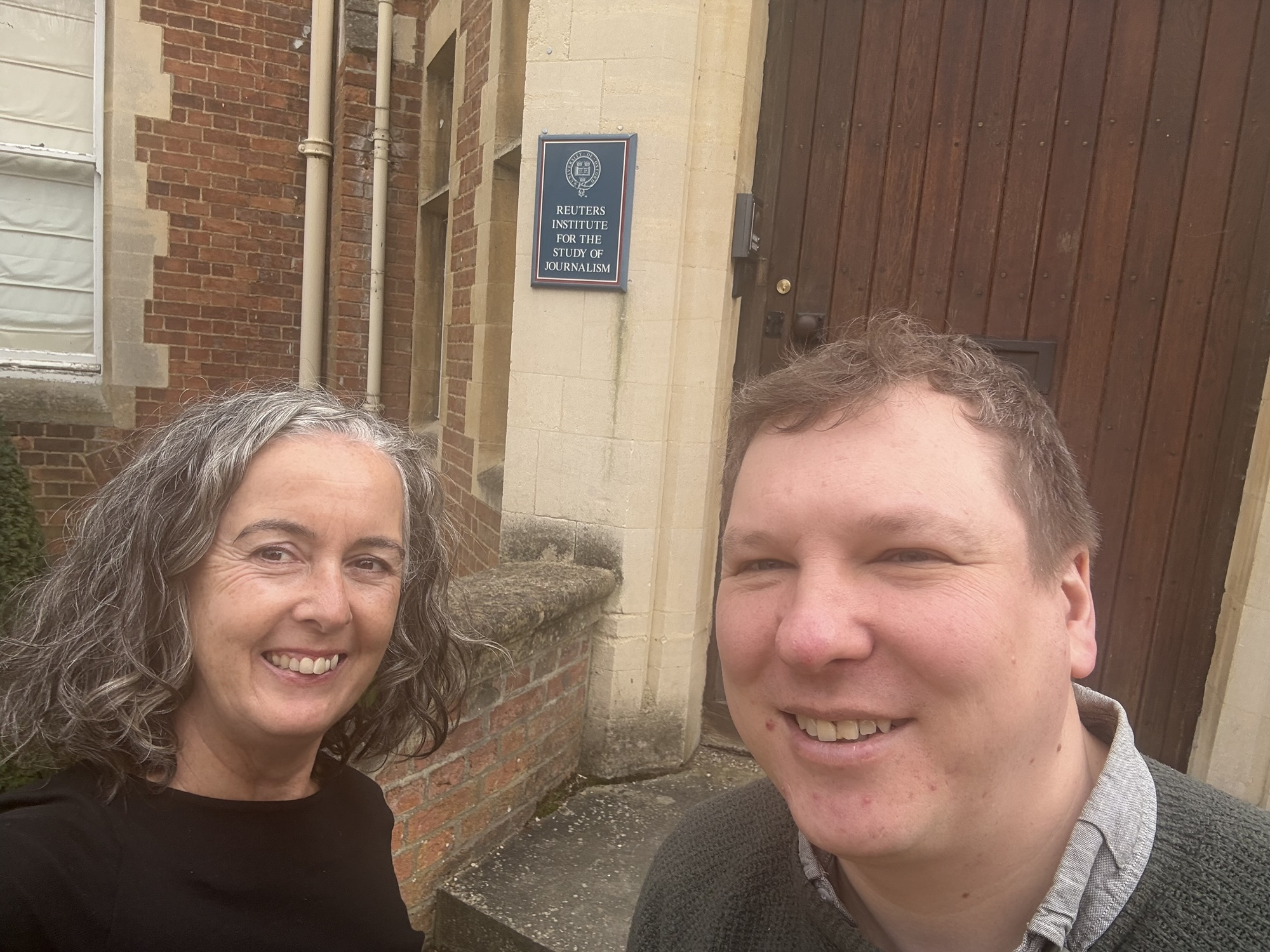
Again, a lot to take in, and Richard offered me a couple more reports and publications to add to the bedside table. I am very grateful to Richard for his time and generosity.
 Máiréad Doyle