
Ireland’s electoral commission, An Coimisiún Toghcháin, was established in February 2023 out of the 2022 Electoral Reform Act. Whilst they do not physically run elections like the electoral commissions in Australia, their other responsibilities are similar. I met with a number of their management team, and their CEO Art O’Leary, over a few days in Dublin, and had great conversations about electoral integrity, public engagement and education, electoral research and, of course, the impact of AI on the spread of disinformation during elections.


Since their establishment in 2023, Ireland has had at least one of every type of election it’s possible to have: a general election, a couple of referendums, some by-elections, a mayoral election and a European election. Coming up later in the year will be the next Presidential election. So their first few years continue to be a baptism of fire for the fledgling commission. Their senior leadership team all come from excellent backgrounds and have managed to hit the ground running, and with their senses of humour broadly intact.
My conversations were wide-ranging but here are the key observations and takeaways:
- An Coimisiún introduced their Framework on Online Electoral Process information, Political Advertising and Deceptive AI Content ahead of the 2024 general election, offering it up as good practice guidelines rather than requiring political parties and candidates to formally sign up. This was an interesting departure to what has happened in other countries, who generally asked for some sort of formal agreement that parties would comply ahead of time.
- A great story about how AI can be used for good in the electoral space: last year a hackathon run by a group of theoretical physicists in Trinity College used AI to solve a tricky constituency boundary problem in Carlow-Kilkenny. It took the team 15 minutes to come up with a solution that rivalled, and perhaps surpassed, the solution that had taken An Coimisiún 6 months to solve earlier in the year.
- An Coimisiún have developed, and maintain, direct relationships with politicians including the leaders of political parties. This is perhaps less risky for them, as they do not physically run the elections like electoral commissions in Australia, but there is something for us to think about here when it comes to the spread of disinformation and the use of AI: disinformation often comes from top politicians and their high-profile supporters. Talking to Registered Officers of political parties might not necessarily be the most influential route for change: often the manipulation of facts comes from the politicians themselves, and none of them see themselves as “the bad guys”.
- Their draft public engagement strategy is currently looking at not only students in secondary and tertiary education, but also adults in lifelong learning such as community education and adult education. This is significant, as we know older people (ie the over 50s like myself!) are possibly more at risk from disinformation and misleading synthetic content because they are less media-literate.
- “There are no hard-to-reach people, just hard to reach services” – CEO Art O’Leary and his team are clear on this one. It’s An Coimisiún’s responsibility to connect with those who might need more help or information to vote successfully, and they do this via trusted people and networks in those communities where possible. Choosing the right messenger, as well as the right message, can make all the difference. We have to hang out in the places they hang out.
- Speaking of which: “If we’re not on TikTok, we’re not reaching young people” – like most developed countries, Ireland has limitations on the use of Tiktok by government officials on government computer networks. But An Coimisiún also knows many (if not most) younger people get a lot of their news and current affairs information from TikTok and Instagram Reels. So they have figured out a way to have a strong, engaging presence on the platform without compromising security.
- An Coimisiún have had some good successes with recent media campaigns such as the April Fool’s Day ads (“Treat Every Day Like April Fool’s Day When Sourcing Information for June’s Elections”) and the clever and funny “your vote is your voice” campaign. Both were developed to be persuasive content for microblogging sites like TikTok. They ran the “your vote is your voice” three times in 2024 for referendums, local elections and the general election, and about 450,000 new voters joined the electoral register, an increase of around 15%.
- Being in Dublin, they are able to maintain good personal relationships with global social media companies and tech companies – as their EU headquarters are located literally down the road. This of course is not the same in Australia, but it is clearly an advantage.
- AI will be a weapon that might be used in referendums even more powerfully because of the stakes: decisions made in referendums are long-term constitutional changes that can’t be revered in the next general election. Also, referendums are often about Socially divisive or other big social issues where people have strong views one way or another. The spread of disinformation is not unusual in referendums around the world, and AI can make this problem far worse.
- Pre-election broadcasting blackouts are pointless or possibly dangerous in the internet age, as the conversation does not stop online and the blackouts may hamper more trusted media sources in helping to debunk late misinformation or disinformation circulating online. This reminded me of Canada’s Critical Election Incident Public Protocol, a process through which Canadians can be notified of an incident that threatens Canada’s ability to have a free and fair election.
- Disinformation registers and other fact-checking initiatives are useful, but beware the Streisand effect.
Finally, CEO Art O’Leary strongly believes that the public needs to have trust both in the electoral process and in the results for democracy to survive, and electoral commissions have a strong and important voice in influencing the public that their trust is deserved.
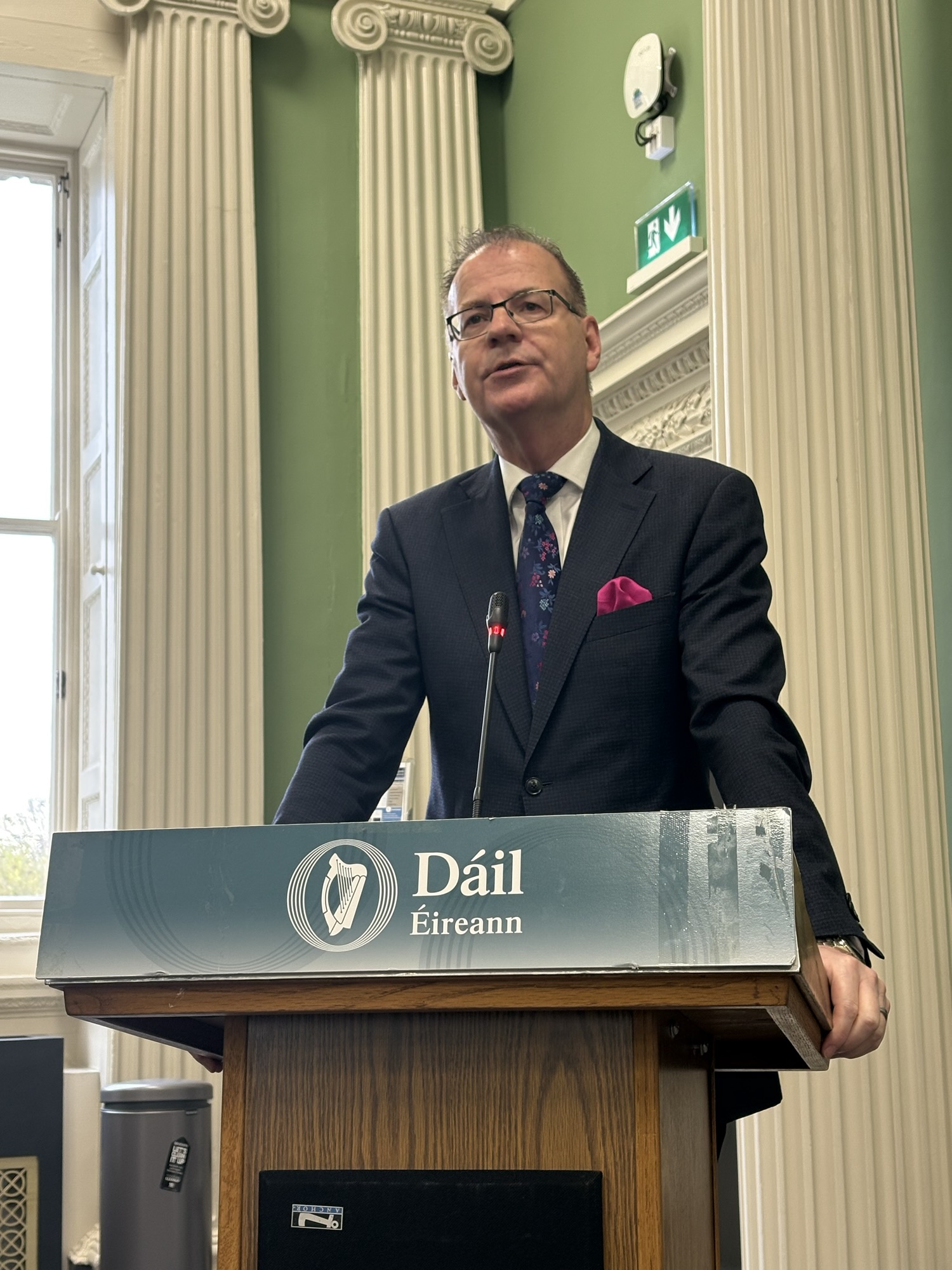
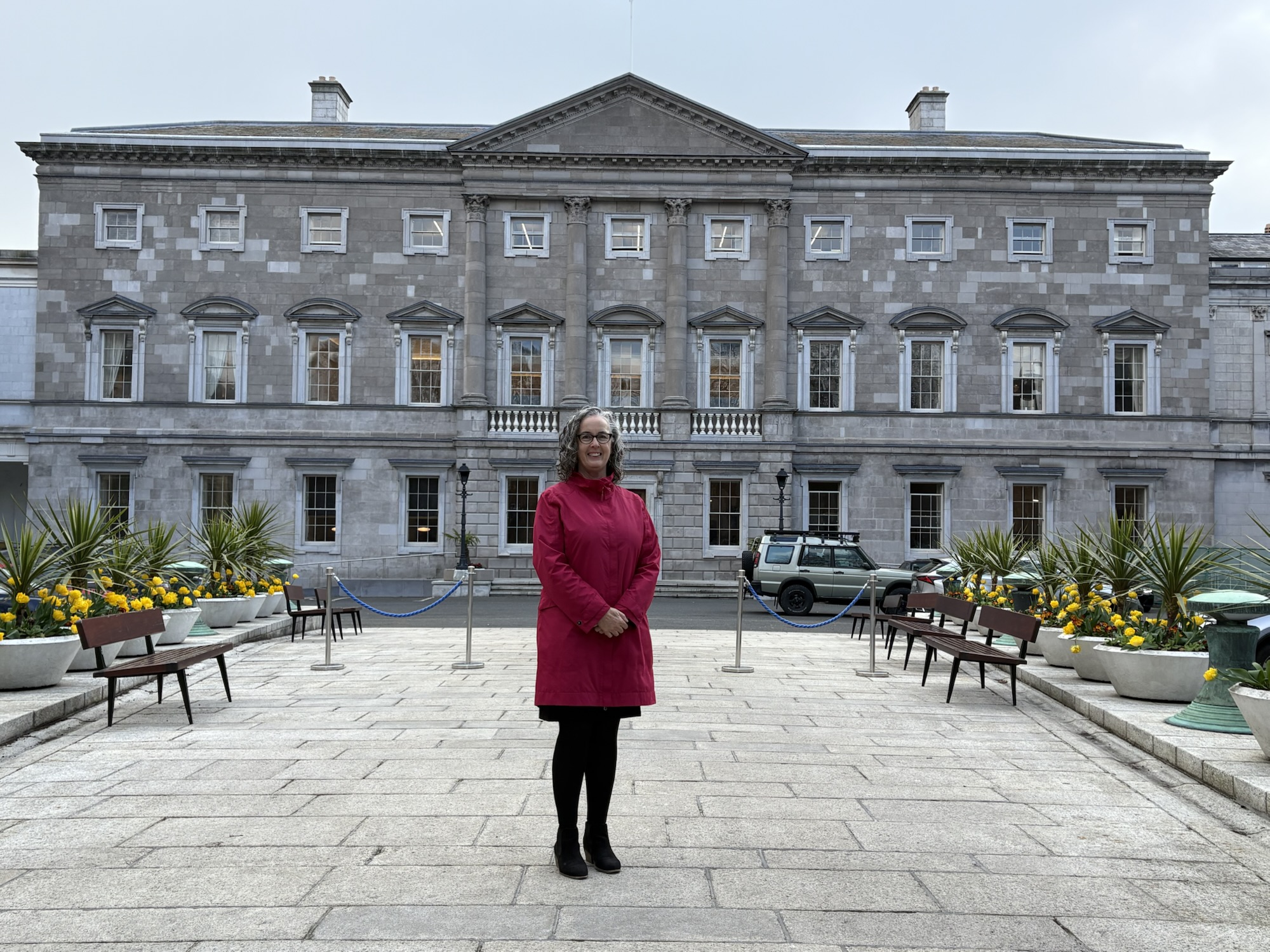
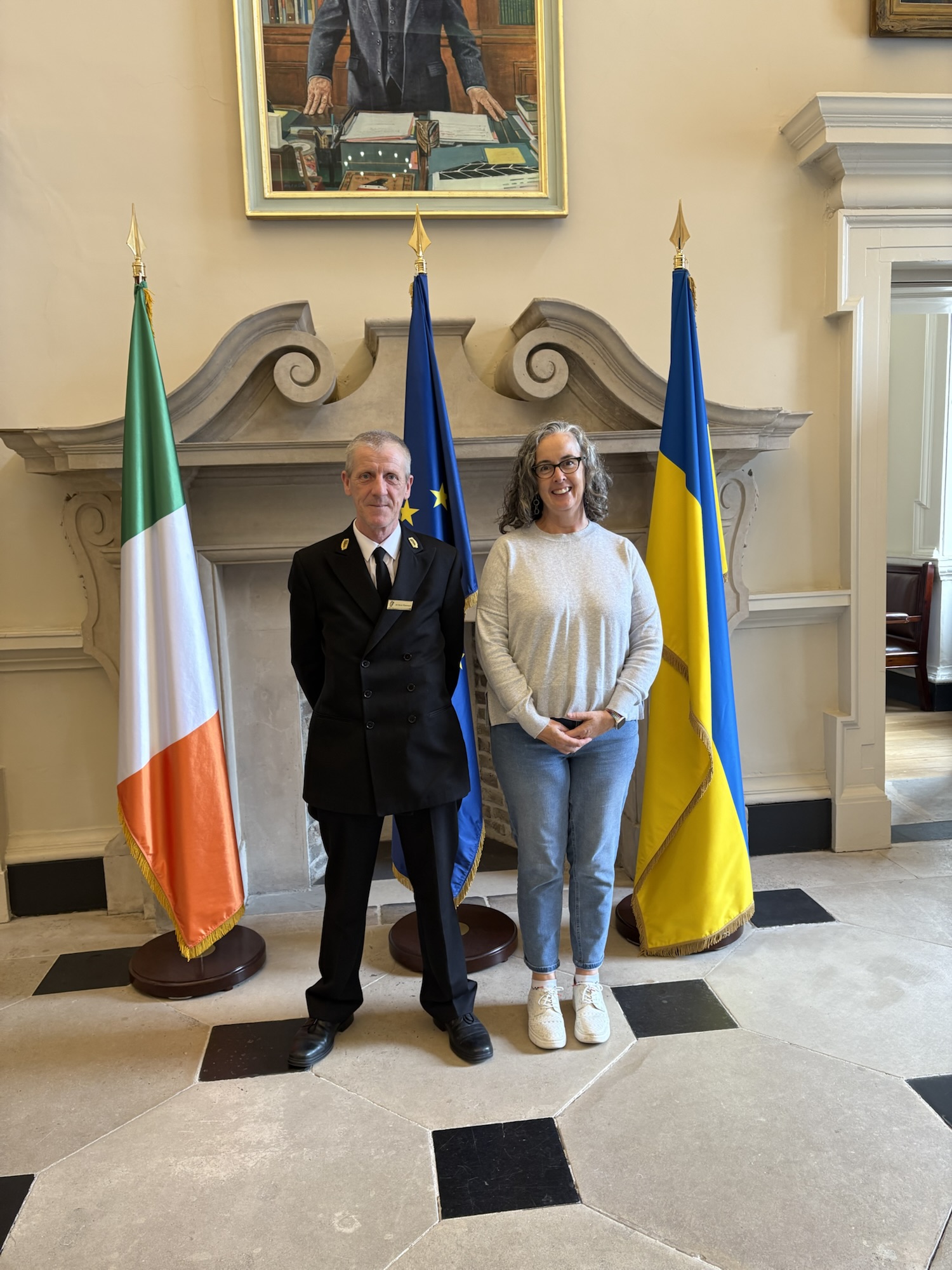
On my last day, I was invited to join Art at a Parliamentary Masterclass where he spoke to Parliamentary Services staff about elections in Ireland. A fascinating session, and I was even asked to answer a question in the Q&A afterwards about the importance of democracy sausages! (I was in favour, of course). I was invited back again the following day for a personal tour of Leinster House, Ireland’s houses of parliament. I even got to try out the seat of the Cathaorlach (chair) of the Seanad!

 Máiréad Doyle