
Katie Harbath, CEO of Anchor Change, is a well-known figure in the tech world, especially from her time at Facebook as the Director of Public Policy for global elections. I had the pleasure of meeting Katie at DC’s iconic Hamilton restaurant, and she was incredibly generous with her insights and experiences.

One of the key topics we discussed was the diverse nature of AI tools. Katie emphasised that not all AI is the same; some tools are generative, while others only use data from closed information systems. It’s crucial to understand the type of AI tools available and how to use them effectively. For instance, asking ChatGPT for election results versus Elon Musk’s opinion on those results can yield vastly different outcomes! Some organisations might choose to allow AI use but restrict it to certain types of prompts.
Katie also highlighted that tech companies are not homogenous in their approaches. For example, OpenAI and Anthropic would say they don’t spread disinformation but can’t control how users utilise their tools. In contrast, Meta is a hybrid technology that has a more complex role in content dissemination. Understanding the landscape we operate in is vital.
We also touched on the efforts of tech companies to support democracy and electoral integrity: Katie mentioned Microsoft’s Democracy Forward initiative and the Aspen Institute’s 2024 symposium on AI in elections, in which a number of tech companies participated.
(Side note: There was also the 2024 Munich tech accord on AI: this website tracks the progress of different companies against the eight core commitments within the Accord. Microsoft’s 2024 Intelligence Threat Intelligence Election Report was particularly useful in highlighting the risks of generative AI to elections – but it would be lovely if all of these agreements and reports were maintained in between US Presidential elections – the rest of the world have elections too!)
Katie believes that many AI companies are keen to partner with civil society organisations on AI education and awareness through corporate social responsibility programs, to help drive market share and brand recognition. She also stressed the importance of transparency in AI use, citing her own ethics and transparency statement published on her Anchor Change Substack.
We discussed the challenges and opportunities AI presents to electoral management bodies (EMBs). A recent report by Arizona’s Artificial Intelligence and Election Security Advisory Committee found that AI-related training and tabletop exercises helped electoral practitioners identify vulnerabilities and refine response strategies.
Katie suggested that there are some positive opportunities AI can present to EMBs too, such as multi-lingual community engagement, improved ballot paper supply forecasting, and live monitoring of voting centre queue times.
Katie still sees value in pre-bunking as a tool to prepare people for the information environment during elections. On the topic of badging, labelling, and authentication strategies, Katie was more circumspect. She argued that while these strategies have some value now, they might not be needed later as we become more familiar with AI. We also talked about the need for EMBs to adapt to the AI-driven world, whilst bound by legislation largely written in the 1990s.
Despite the emerging threat of AI-generated disinformation, Katie reminded me that each of us as media consumers still have individual agency over what we consume:
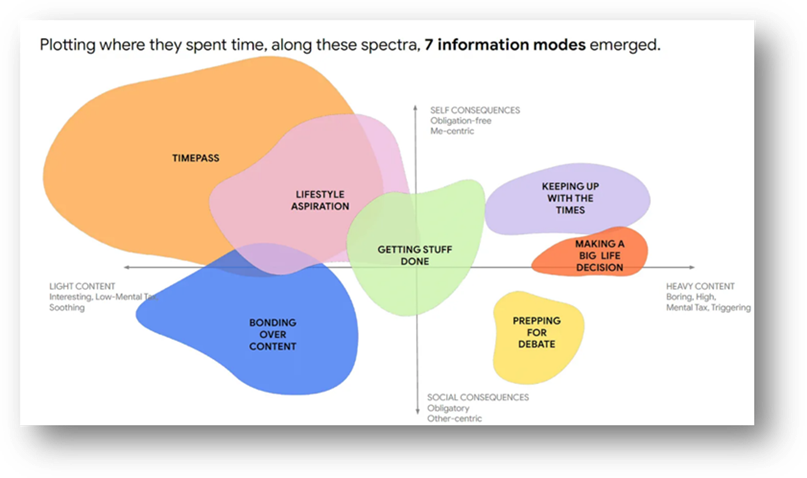
“Have you ever consciously thought about what it is you are tapping on stopping on liking? What got me here? Am I getting the right mix of news and everything? Am I paying attention to how it makes me feel?”
She referenced the research Google Jigsaw and Gemic did on how Gen Zers engage with social media – here is a link to Katie’s own blog post on this.
Lastly, Katie emphasised the importance of interdisciplinary skills in the AI field. We need historians, data scientists, storytellers, journalists, and legal scholars to navigate this complex landscape. Kate Starbird, academic at the Center for an Informed Public, echoed this sentiment in the Q&A after her recent lecture “A Spotlight on Rumors”.
(I cannot recommend Starbird’s lecture highly enough – find an hour, pour yourself a drink and watch the whole thing, including the Q&A session which includes some profound concepts not fleshed out in the lecture itself)
And the last word from Katie Harbath herself, a declared optimist:
“There is a lot of lot of real opportunity in using AI and being a leader, and helping others [understand] what this new world’s gonna look like… By doing that, it’s going to help us [figure] out how to create those ethical guardrails.”
 Máiréad Doyle